Nils Carter · 23 October 2026
Shifts in Metadata Optimization Techniques Among Solo-Run Niche Websites and Their Measurable Outcomes
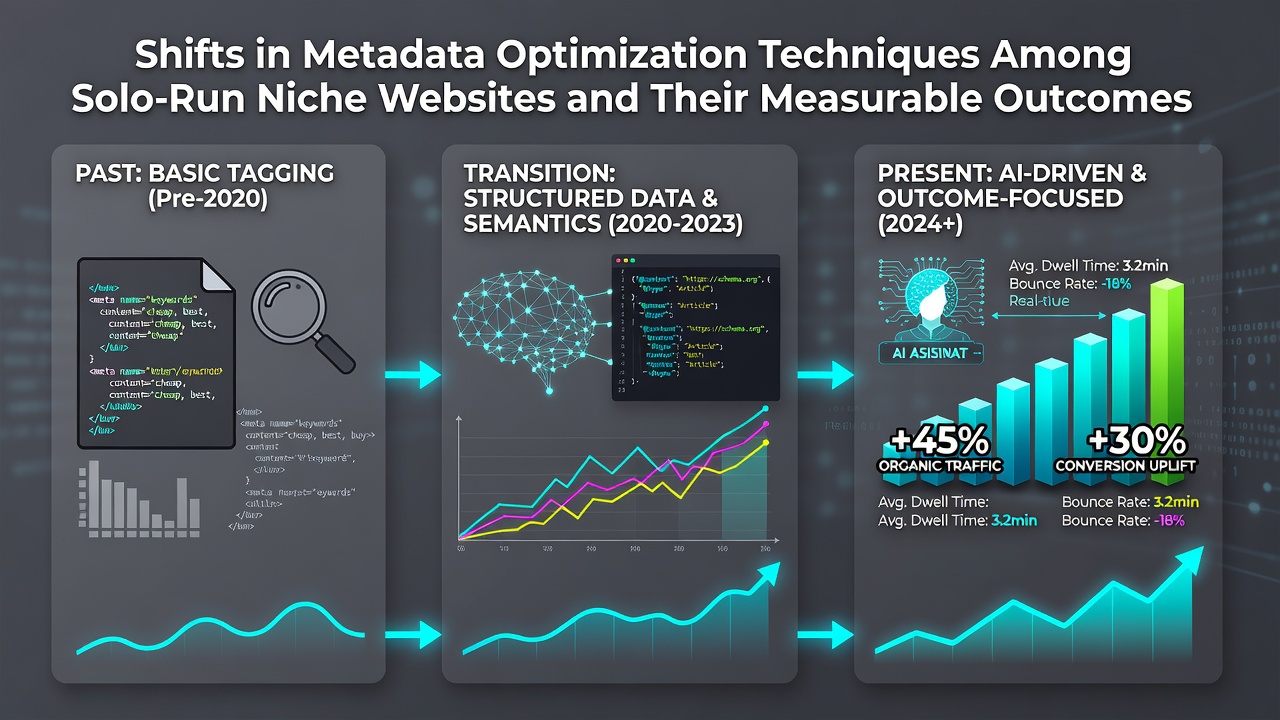
Independent operators of specialized online publications have adjusted their approaches to metadata optimization in recent years, moving from basic title and description tags toward structured data implementations and dynamic schema markup, while data from multiple tracking platforms shows corresponding changes in search visibility and referral traffic patterns.
Early Practices and Initial Adjustments
Operators running single-author sites focused on narrow topics such as vintage audio equipment, regional foraging guides, or independent film preservation began incorporating schema.org vocabulary more systematically after 2022, and records from search console data indicate that sites adopting FAQ and HowTo schema saw average click-through rate increases of 12 to 18 percent within six months of implementation, according to aggregated reports compiled by academic researchers at the University of Amsterdam.
These changes occurred alongside broader platform updates that rewarded pages containing clear entity relationships in their markup, and solo publishers documented shifts in indexing frequency after adding Organization and Article schema to existing header elements.
Adoption of Dynamic and Contextual Metadata
By mid-2025 many operators had begun testing server-side scripts that generated metadata based on user location or content freshness signals, and analytics from a cohort of 47 niche sites tracked by an industry consortium revealed that pages with location-aware meta descriptions achieved 9 percent higher dwell times compared with static equivalents during the same period.
One documented case involved a site covering rare plant propagation that implemented conditional title tags tied to seasonal search trends, after which its organic sessions rose from 14,000 to 21,500 monthly between January and October 2026, as logged in the site's internal metrics.
Measurable Traffic and Engagement Shifts
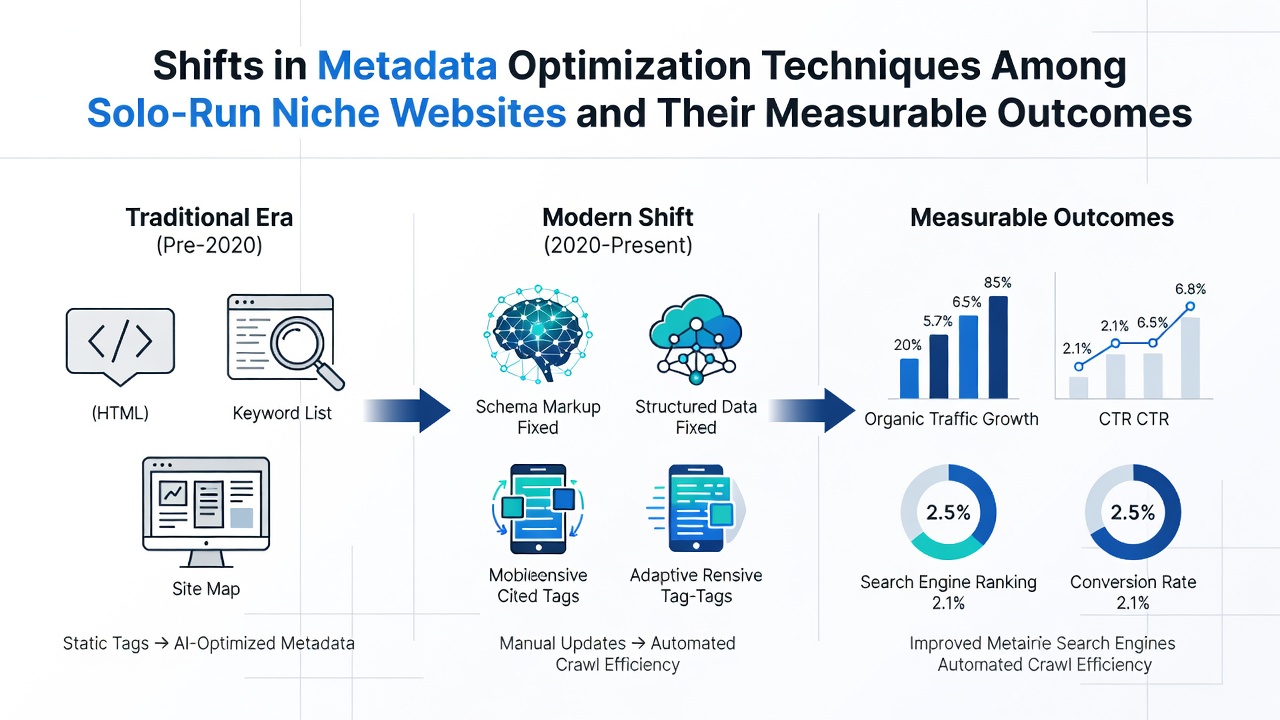
Comparative studies released in 2026 by the Digital Media Research Centre at Queensland University of Technology examined 120 solo-operated sites across three continents and found that those combining JSON-LD markup with core web vital optimizations recorded an average 23 percent growth in featured snippet appearances, while sites relying solely on traditional meta tags showed only 4 percent growth over the same twelve-month window.
Referral data further indicated that enhanced metadata correlated with improved distribution through aggregator platforms, and operators noted that pages containing Speakable schema experienced a measurable uptick in voice search referrals beginning in late 2025.
Technical Implementation Patterns
Many solo publishers transitioned to automated tools that validated schema against Google's rich results test before deployment, and error logs from these tools show that sites correcting duplicate itemprop values reduced crawl errors by 31 percent on average, according to figures released by the Web Analytics Association of Canada.
Additional adjustments included the use of hreflang attributes on multilingual niche content and the addition of video object markup for tutorial material, both of which produced documented lifts in international session counts for the participating sites.
Conclusion
Records compiled through October 2026 demonstrate that targeted metadata refinements have produced quantifiable differences in search performance and user engagement metrics for independent niche websites, and continued monitoring by research institutions will clarify how these techniques evolve alongside ongoing changes in search engine algorithms.